
Acoustic Liquid Handling Explained: Principles, Benefits, Applications, and FAQs
Published: outubro 27, 2026
What is acoustic liquid handling?
Acoustic liquid handling is a non-contact liquid transfer technology that uses focused ultrasonic energy to move nanoliter droplets with high precision, without pipette tips, pins, or nozzles. It is widely used in drug discovery, genomics, synthetic biology, and other life science workflows because it helps reduce contamination risk, minimize reagent use, and improve reproducibility.
From early discoveries in acoustic energy to modern acoustic droplet ejection (ADE) systems with Dynamic Fluid Analysis (DFA), acoustic liquid handling has become a scalable approach to low-volume liquid transfer for high-throughput screening, assay miniaturization, compound management, and precision genomics workflows.
Why researchers use acoustic liquid handling
- Transfers nanoliter volumes accurately and reproducibly
- Eliminates pipette tips, helping reduce consumable waste and carryover risk
- Supports assay miniaturization and high-throughput screening
- Handles a wide range of fluid types through adaptive acoustic sensing
- Improves workflow flexibility for drug discovery, genomics, and synthetic biology
Why acoustic liquid handling was needed: A Fit for a Crucial Need: High-Throughput Experimentation in Drug Discovery and Genomics4
The 1980s through the 1990s, concomitant with advances in computer technology and robotics, as well as chemical synthesis automation (Combinatorial Chemistry), saw the rise in high-throughput experimentation for drug discovery. The first 384-well plate was launched commercially in 1992 and the first 1536-well plate in 1997.3 Additionally, advances in biology (Human Genome Project, high-throughput SNP genotyping) created the need for high-throughput sample management. The infrastructure was in place; however, challenges emerged across multiple dimensions, including consumables waste, carryover contamination risk, and variability in compound composition. This variability resulted in compound-specific behaviors such as adherence to plastic tips, precipitation, and insolubility, with inconsistencies in dispensing—together impacting the accuracy of screening and titration.
From Early Acoustics to Modern Liquid Handling
The ability to exert forces without physical contact, often described as “action at a distance,” has historically been associated with electromagnetic radiation and explored across a wide range of scientific, military, and medical applications. Extending this concept to mechanical energy, early investigations into the use of sound revealed its potential to manipulate fluids, with the generation of droplets using acoustic energy first reported in the late 1920s.
These pioneering experiments, conducted by Alfred Lee Loomis and Robert Williams Wood, laid the foundational observations that would later evolve into modern, highly controlled acoustic liquid handling technologies.

Figure 1: Stroboscopic sequence of an acoustic droplet ejection produced by an Echo instrument.
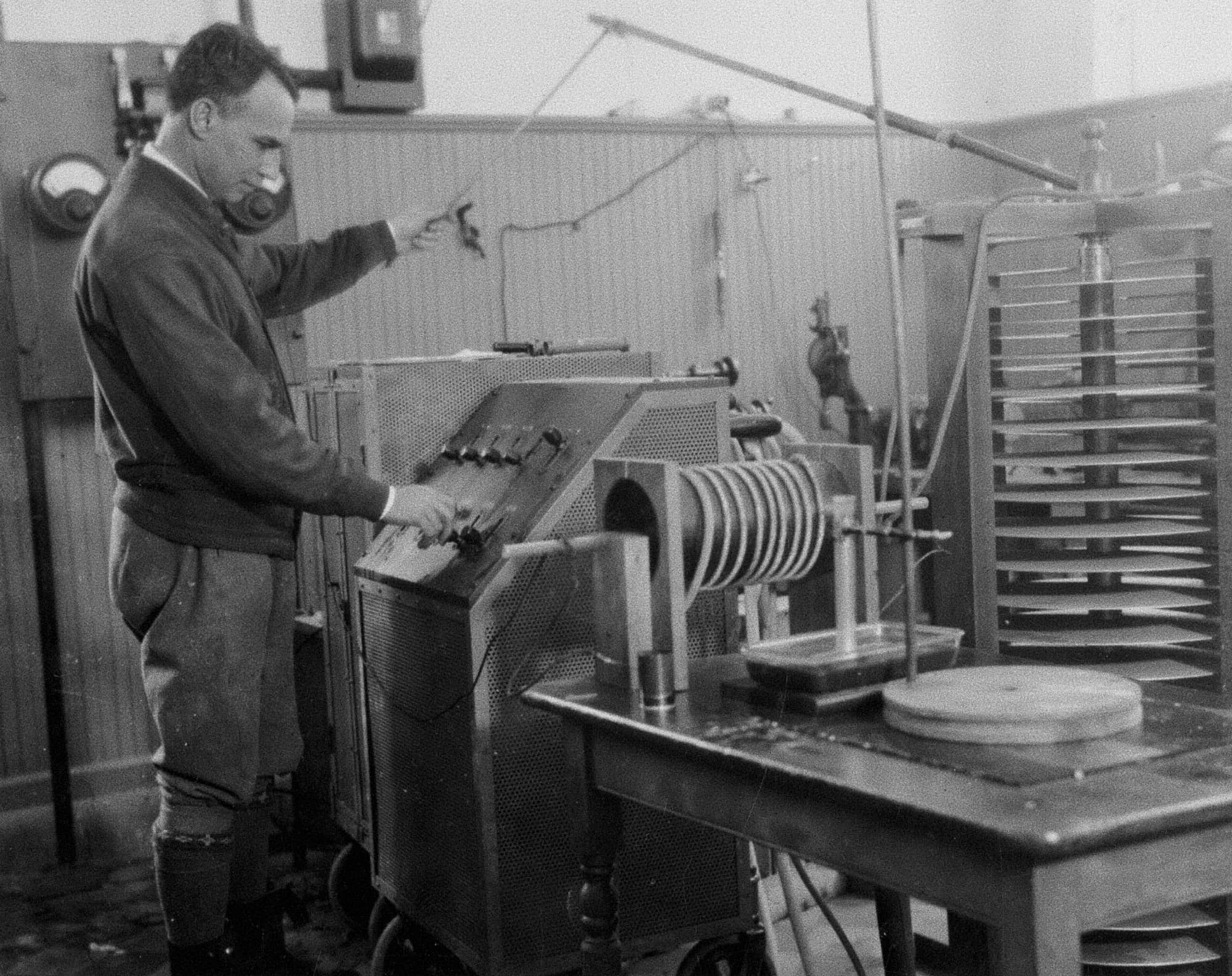
Figure 2: Image of Alfred Lee Loomis performing work with an experimental ultrasound transducer at the Tower House laboratory (Tuxedo Park, NY). Photo courtesy of the Smithsonian Institution Archives. Acc. 90-105 [SIA2008-5428]
How Acoustic Liquid Handling Works: Acoustic Droplet Ejection (ADE)
Modern acoustic liquid handling systems manipulate fluids by combining focused ultrasonic energy, droplet hydrodynamics, and integrated sensing technologies.
In Acoustic Droplet Ejection (ADE):
- An acoustic transducer generates ultrasonic waves
- These waves travel through a coupling medium (water), the solid base of a microplate well, and are focused at the liquid–air interface (meniscus)
- Acoustic radiation pressure deforms the liquid surface
- When the applied energy exceeds a defined threshold, a single, discrete droplet is ejected in a controlled and reproducible manner
Because the acoustic source never contacts the liquid, ADE eliminates the need for tips, pins, or nozzles—reducing contamination risk, consumable costs, and sample loss while enabling highly precise nanoliter dispensing.1
The first generation of Echo liquid handlers applied ADE technology to dispense precise 2.5 nL DMSO drops. Later, and patented in 2012, Dynamic Fluid Analysis was developed by Labcyte scientists and engineers as part of the new generation of Echo acoustic liquid handling platform to enhance acoustic liquid handling by automatically adapting to fluid properties by adjusting the acoustic power on a per-well basis.5
Dynamic Fluid Analysis (DFA): Adapting to Liquid Properties
Dynamic Fluid Analysis (DFA) is an acoustic sensing technique that characterizes the acoustic fluid properties of a well and provides the system the ability to make appropriate adjustments to power before transfers. At the beginning of an Echo liquid handling protocol, the instrument conducts a survey of the source plate and returns well-based acoustic features (such as the reflections of the bottom of the plate, bottom of the well, and liquid-air interface) back to the system. During in-transfer processes, a subthreshold acoustic pulse induces a transient surface deformation that is interrogated using an audit pulse, and frequency domain analysis of the reflected signal provides a quantitative surface response metric. This metric enables prediction of the acoustic power required to reach the droplet ejection threshold, allowing compensation for fluid-dependent properties such as surface tension and viscosity.1
How ADE and DFA enable precise, scalable liquid handling
The combined technologies used within Echo acoustic liquid handlers—Acoustic Droplet Ejection (ADE) and Dynamic Fluid Analysis (DFA)—enable a fundamentally different approach to liquid handling. ADE provides the physical mechanism for transferring discrete droplets by focusing ultrasonic energy at the liquid–air interface until the ejection threshold is exceeded. At this point, acoustic radiation pressure overcomes surface tension and ejects a droplet whose volume is governed by the acoustic frequency, focal geometry, and fluid properties. DFA complements this process by characterizing each liquid prior to ejection and using fluid-specific parameters to set the excitation power in real time. Together, these technologies decouple liquid transfer performance from assumptions about fluid composition and eliminate the need for manual calibration.
By integrating real‑time acoustic sensing with adaptive control, Echo systems can reliably transfer a wide range of fluids—including DMSO solutions, aqueous buffers, protein formulations, nucleic acids, cell lysates, and reagents with varying viscosities or surface tensions—within a single workflow. This capability enables consistent droplet formation across both well‑characterized and previously uncharacterized fluids, improving transfer reliability while minimizing droplet‑to‑droplet variability and sample loss.
These advances have enabled acoustic liquid handling to move beyond a niche dispensing method and become a broadly applicable platform technology for life science research. In drug discovery, Echo systems support assay miniaturization, high-density screening, direct dilution workflows, and complex plate reformatting with reduced reagent consumption and improved data quality. In genomics and synthetic biology, the ability to perform precise, contactless transfers at nanoliter scale supports increasingly complex, multiplexed experimental designs while reducing contamination risk and consumable waste.
Building on early-twentieth-century discoveries that demonstrated sound’s ability to manipulate fluids, modern acoustic liquid handling combines physics, signal processing, and system integration into a robust and scalable technology. The Echo Acoustic Liquid Handler exemplifies how fundamental principles of acoustics, when coupled with real-time sensing and control, have translated into a practical solution that continues to reshape how liquids are handled in modern laboratories—from early discovery through advanced biological research.
Why Acoustic Liquid Handling Matters in Bioanalysis
Advances in bioanalytical methodologies have enhanced analytical sensitivity while minimizing sample volume requirements, thereby necessitating reliable handling of microliter- and submicroliter volumes, particularly for limited samples.
Automated acoustic liquid handling enables2:
- Accurate low-volume dispensing
- High-throughput analysis
- Reduced sample and reagent consumption
- Improved data quality and reproducibility
Applications of acoustic liquid handling in drug discovery, genomics, and life sciences
Modern acoustic liquid handling systems combine both actuation and sensing within the same acoustic pathway. This integration enables accurate, high-throughput transfer of nanoliter-scale volumes across a wide range of biological and chemical fluids.
- Drug discovery: Acoustic technologies are widely used for assay assembly, high-throughput primary screens (HTS), rapid cherry picking of samples for secondary and confirmatory screens, potency and affinity characterization of chemotypes, pooled compound screening, nanochemistry/direct-to-biology (D2B) screens, combination therapy studies, arrayed functional screens (siRNA, sgRNA/RNP), and handling of therapeutic peptides, where accurate low-volume dispensing is critical.
- Protein crystallography: Acoustic methods enable precise transfer of low volume and viscous samples for reproducible crystallization setups.
- Cell-based assays: Gentle, non-contact liquid handling preserves cell viability and maintains assay integrity during complex, multistep workflows.
- Industrial and bioprocessing applications: Acoustic approaches support the handling of industrial enzymes and other highly viscous formulations.
- Synthetic biology: Acoustic liquid handling enables automated, high-precision assembly of complex biological systems and combinatorial designs.
Together, these applications illustrate how acoustics have evolved into a versatile enabling technology across experimental domains far beyond early explorations of acoustic phenomena1.
References:
- Hadimioglu et al. Moving Liquids with Sound: The Physics of Acoustic Droplet Ejection for Robust Laboratory Automation in Life Sciences. Journal of Laboratory Automation; 2016, Vol. 21(1) 4–18. DOI: 10.1177/2211068215615096.
- Naylor J et al. Acoustic Dispensing Preserves the Potency of Therapeutic Peptides throughout the Entire Drug Discovery Workflow. Journal of Laboratory Automation; 2016, Vol 21(1) 90–96. DOI: 10.1177/2211068215587915.
- History of Microplates – The Plastics Historical Society
- The Evolution of High-Throughput Screening | Technology Networks
- Alfred Lee Loomis—last great amateur of science - Physics Today
FAQs about Acoustic Liquid Handling
What is acoustic liquid handling?
Acoustic liquid handling is a non-contact method that uses focused sound energy to transfer very small droplets of liquid accurately, without pipette tips or physical contact.
Echo Acoustic Liquid HandlersWhat is meant by contactless liquid handling?
Contactless liquid handling means the instrument transfers liquid without a tip, pin, or nozzle touching the sample, which helps reduce contamination and sample loss.
How does acoustic energy enable droplet ejection?
Focused ultrasonic waves create pressure at the liquid surface. When that pressure exceeds the ejection threshold, a small droplet is released in a controlled way.
What is the role of an acoustic transducer in ADE?
The acoustic transducer generates and focuses ultrasonic energy so the system can sense the liquid and eject droplets precisely.
More about ADEWhat determines droplet ejection?
Droplet ejection depends on the balance between acoustic energy and the liquid’s physical properties, especially surface tension, viscosity, and acoustic response.
What are the main advantages of acoustic liquid handling?
The main benefits are precise low-volume transfer, reduced contamination risk, fewer consumables, less sample waste, and better support for miniaturized and high-throughput workflows.
Why is acoustic liquid handling important in bioanalysis?
It is important in bioanalysis because it enables accurate dispensing of tiny sample volumes, which is critical when assays become more sensitive and samples are limited.
How do fluid properties affect performance?
Fluid properties such as viscosity, surface tension, density, and acoustic impedance influence how much energy is needed for reliable droplet ejection.

Talk to an Expert
Echo Acoustic Liquid Handlers
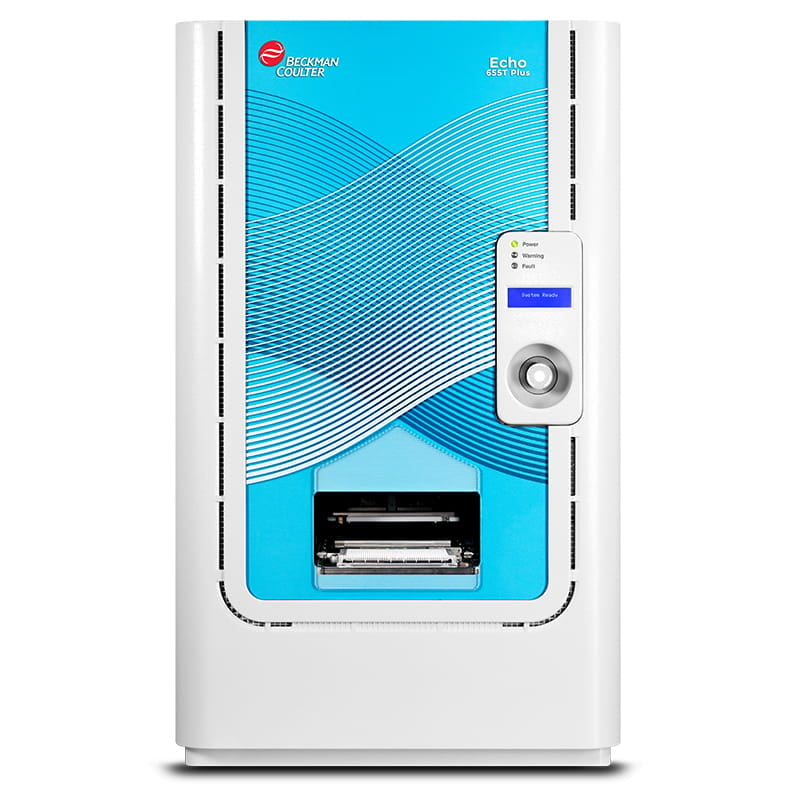
Echo 650 Plus Series Acoustic Liquid Handlers
High‑Throughput, Non‑Contact, Accurate, and Precise Liquid Dispensing with Volumes as Low as 2.5 nL

Echo Plate Reformat Software
Echo Plate Reformat software offers a variety of liquid transfer functions, including assay plate replication, library compression, & customization.

Echo Cherry Pick Software
Echo Cherry Pick software enables transfers of any volume of liquid from any source well into any destination well.

Echo Dose-Response Software
Echo Dose-Response software provides a simple step-wise process for designing assay plate layout and creating dose-response curves.


